
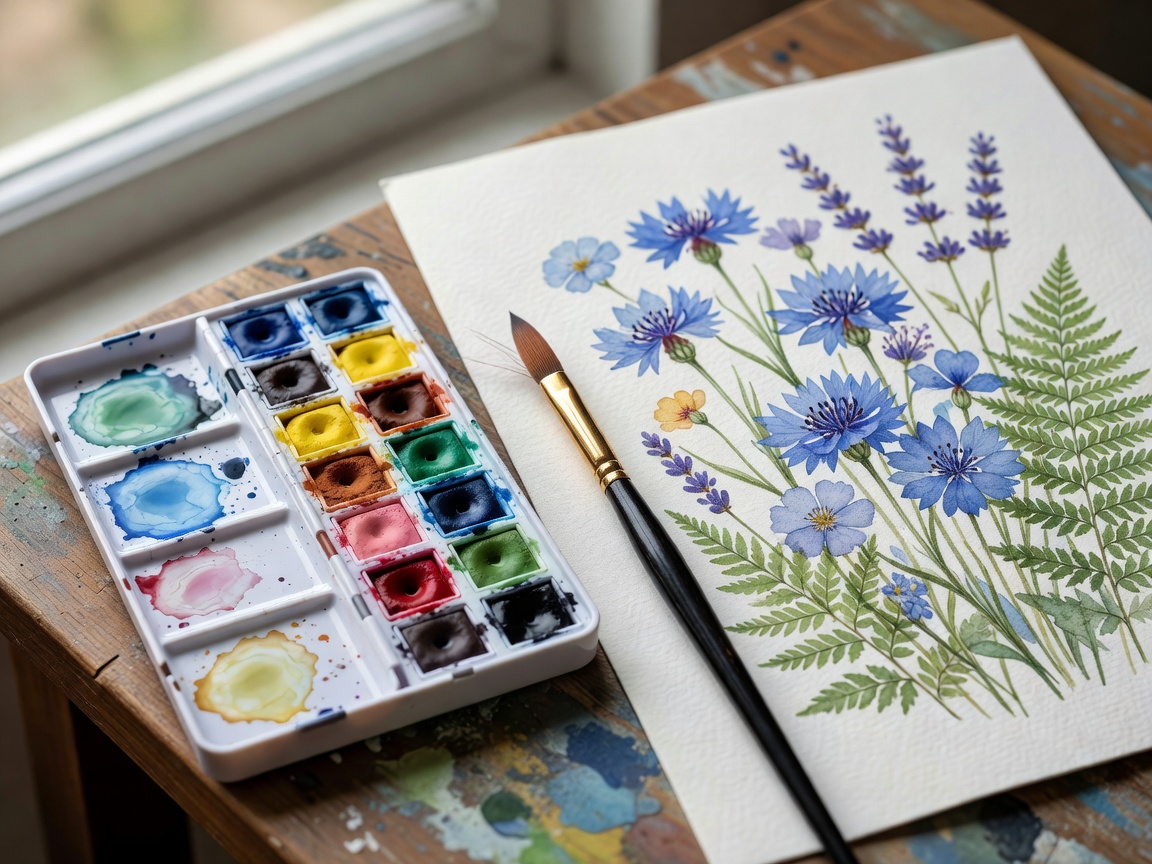
1. The Foundation: 100% Cotton Rag Paper Chemistry
Wood-pulp (cellulose) papers cannot withstand botanical wet-in-wet techniques. Wood pulp causes pigment particles to sit on top of the surface, drying with harsh cauliflower blooms and bucking severely under water washes. Botanical illustration demands 300gsm (140lb) 100% Cotton Cold-Press or Hot-Press Paper with internal gelatin sizing.
Gelatin sizing allows water to seep gradually into the cotton matrix, giving the artist 3 to 5 minutes of working time to blend delicate color gradients before the paper reaches its drying threshold.
2. Pigment Transparency vs Granulation
Not all watercolor tubes behave identically. In botanical art, muddy colors occur when opaque or heavily granulating pigments are layered on top of one another:
- Staining / Transparent Pigments (e.g., Quinacridone Magenta PR122, Phthalo Green PG7): Ideal for luminous glazes. Light passes through the transparent crystal layer, reflects off the white cotton substrate, and returns to the eye.
- Granulating / Opaque Pigments (e.g., Cerulean Blue PB35, Raw Umber PBr7): Settle into the micro-valleys of cold-press paper. Use selectively for tree bark, seed pods, or root textures rather than delicate petals.
The Two-Jar Water Method
Always maintain two clean water reservoirs on your desk. Jar #1 is dedicated solely to washing pigment off dirty brushes; Jar #2 is reserved exclusively for pulling pure, clear water to wet pristine paper areas.
3. Step-by-Step Glazing Demonstration: Ranunculus Petal
- Pre-Wetting the Shape: Using a #6 round Kolinsky sable brush, lay a flat wash of pure clear water inside the penciled petal perimeter. The paper should display a soft satin sheen (not a standing puddle).
- Initial Tea-Consistency Wash: Load the brush tip with a weak dilution (90% water, 10% Quinacridone Rose). Touch the brush to the base of the petal; allow capillary action to draw pigment upward toward the highlight.
- Drying to Bone-Dry: Allow Layer 1 to dry 100% naturally. Never use a high-heat hair dryer, which breaks down delicate paper sizing.
- Second Glaze (Milk-Consistency): Apply a richer blend of Nickel Azo Yellow and Quinacridone Gold to shadow contours, feathering edges with a damp brush to create translucent depths.
4. Technical Palette Reference Chart
| Botanical Subject | Recommended Pigment Formula | Glaze Ratio (Water : Pigment) |
|---|---|---|
| Lush Spring Foliage | Hansa Yellow Medium + Sap Green (PY97 / PG36) | 70% Water : 30% Pigment |
| Translucent Crimson Petals | Quinacridone Coral + Permanent Rose (PV19) | 85% Water : 15% Pigment |
| Deep Stem Shadows | Indanthrone Blue + Burnt Sienna (PB60 / PR101) | 50% Water : 50% Pigment |